
It began in the 1980s
My interest in computing and robotics started in high school: AND, OR, and NOR gates assembled on old motherboards, Fortran on punch cards, BASIC stored on cassette tape, Boolean mathematics, and the machine learning of that era.
In college the interests ran wide: pilot school, piano and organ, writing fiction. Events in my life turned me toward safety science, and safety science gave the earlier interests a direction: human factors, robotics, and the safety of people in evolving work systems.
Two papers, one year
Both interests reached the public record in 1988, weeks apart, while I was an undergraduate at USC.
In October, I co-authored a paper with Max Vercruyssen's research team on the human side: how age, activation, stimulus quality, and practice shape attention and visual choice reaction time.
Attention reduces the likelihood of the misinterpretation or failure to process information.
Vercruyssen, M., et al. Effects of age, gender, activation, stimulus degradation and practice on attention and visual choice reaction time. Proceedings of the Human Factors Society 32nd Annual Meeting (1988), 203–207 · doi.org/10.1177/154193128803200307
In November, Professional Safety published my paper on the machine side: industrial robot hazards, and the sensor technologies then emerging to detect people near consequential motion. It took first place in ASSE's Sixth Annual Student Paper Awards Competition.
A poorly planned robotic application can create a situation more hazardous than the one it replaced.
Burton, Jane. Industrial robotics: Hazards, accidents, safety applications and advanced sensor technology. Professional Safety, November 1988, 28–33 · Jaina Ko, writing as Jane Burton
The concerns that drove those papers have become emergent issues of everyday work. One line asked what conditions govern human attention. The other asked how machines could detect humans. The third question, who authors the conditions both perform under, took a career to answer.
Different industries, the same pattern
I built a career as a safety practitioner and witnessed firsthand how different industries, with different complexities, wrestled with the same pattern: the gap between work-as-imagined and work-as-done.
My career has crossed construction, hazardous-waste and asbestos remediation, environmental site assessment, aerospace, consulting, and manufacturing involving corrosive cleaning products, medical devices, pharmaceuticals, food, and industrial flow control. I worked at McDonnell Douglas, Rocketdyne, and Collins Aerospace, and consulted for small and mid-sized businesses while raising my family.
People bridged that gap through judgment, adaptation, coordination, and recovery. Organizations depended on that capacity, rarely recognized it, and sometimes blamed workers for the very variability that kept the system functioning.
Lineage. Work-as-imagined and work-as-done are Erik Hollnagel's terms. HAOP builds on the Human and Organizational Performance lineage of Conklin, Dekker, and Hollnagel; it extends that lineage to AI-enabled work.
The reversal
AI reversed the old expectation without correcting it. People are still expected to behave like machines, while AI is spoken of as if it were human: an assistant, a colleague. Neither picture describes a work system.
HAOP uses performer as the neutral term for what shapes the work. Human, AI, and organizational performers are examined together, each with distinct contributions and distinct failure signatures. They are analytically parallel, not morally equivalent. Humans are people. AI is not. The organization allocates the functions and authors the conditions under which both perform.
The framework
The result is Human, AI, and Organizational Performance. Revision 6.0.1 of the white paper is deposited and citable, the applied method and the entry tools are public, and every revision stays on the record. The framework develops through pilots and independent research; both are invited.
Who is behind HAOP
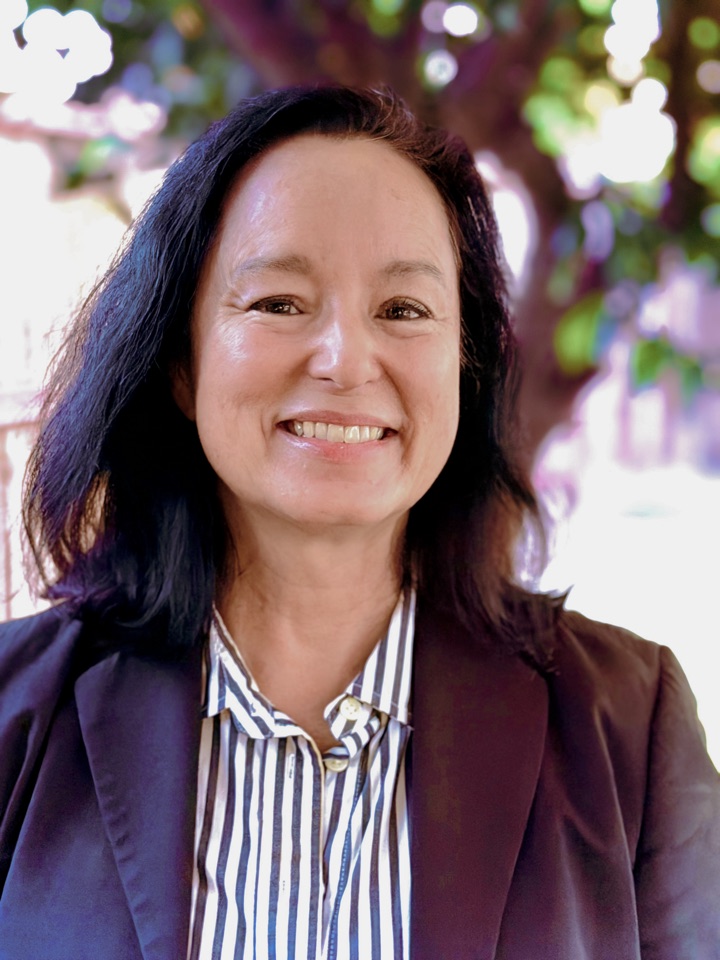
I am Jaina Ko, CSP, an independent researcher and the creator of Human, AI, and Organizational Performance (HAOP). I develop the framework and deposit its public revisions in the open. I use AI models to accelerate research and drafting; the judgments, claims, and accountability are mine.